


© 2026
Mapping Ocean Futures
What if the Oceans Weren't About Borders, But About a Vital, Interconnected System That Supports All Life on Earth?
Ocean Temperatures are at Record Levels
The ocean covers over 70% of our planet’s surface with an average depth of over 3600m, and has absorbed more than 90% of the excess heat generated by human activity since industrialisation. For decades, it has buffered us from the worst effects of a warming world. That buffer is now weakening and it requires a combination of mitigation and adaptation efforts.
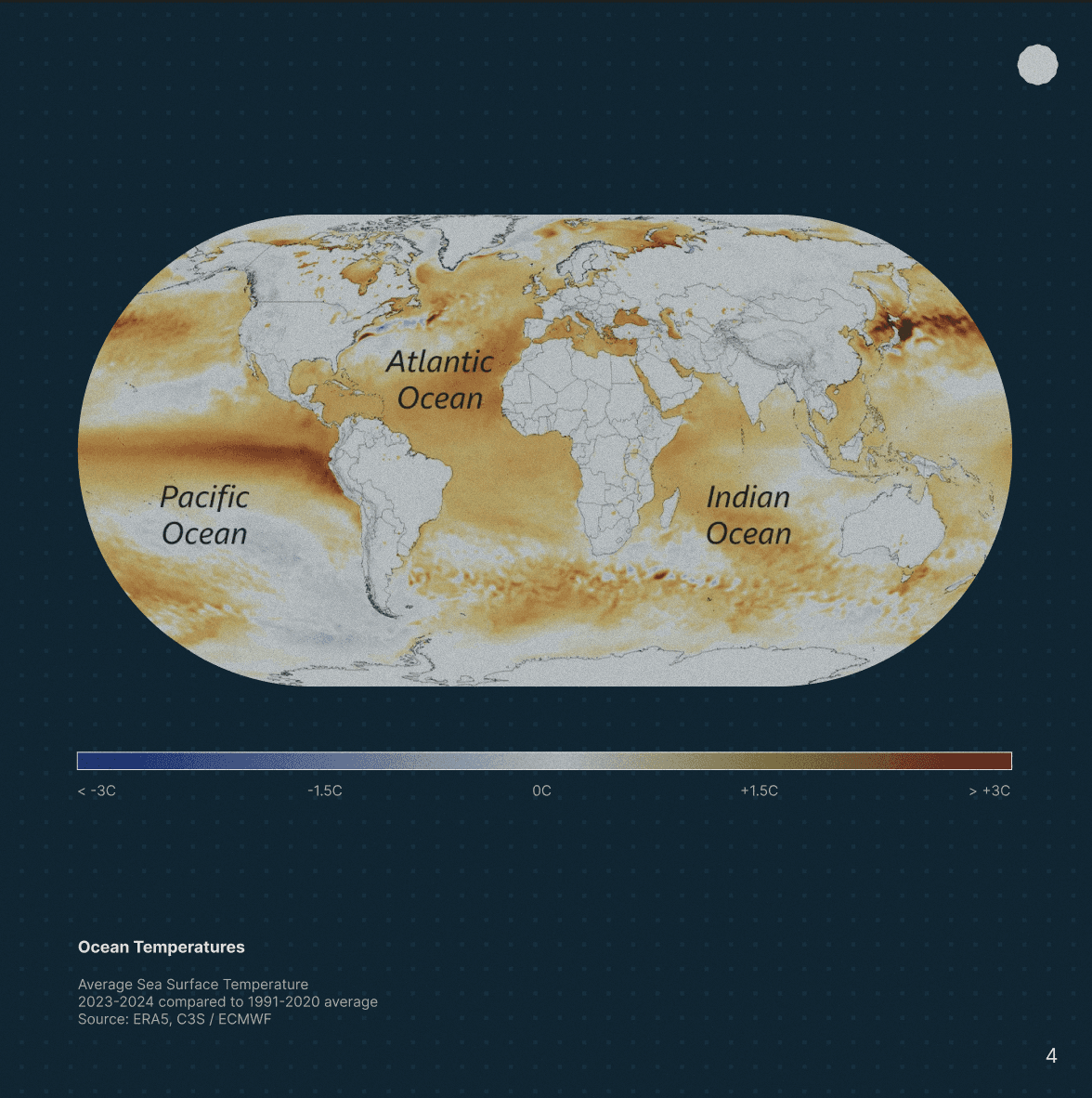
Researchers found that global average sea-surface temperatures, where the ocean water and atmosphere meet, in 2025 were the third highest on record and remained about 0.5°C (1°F) above the 1981–2010 average baseline. Some areas are warming faster than others: the warmest areas included the South Atlantic and North Pacific Oceans, and the Southern Ocean.
2025 was the third-warmest year for oceans in NOAA’s global temperature record, which dates back to 1850. Today, while we see the blue economy grow; we also see record ocean warming across every basin, large-scale ice melt, rapid sea level rise, biodiversity loss and extreme weather effects. These impacts are a urgent threat to the health of our oceans - whose stability the global economy relies on, and more importantly to the millions of species that inhabit Earth and call it home.
But what is causing this warming? And what exactly does it mean for humans?
The Largest Carbon Sink
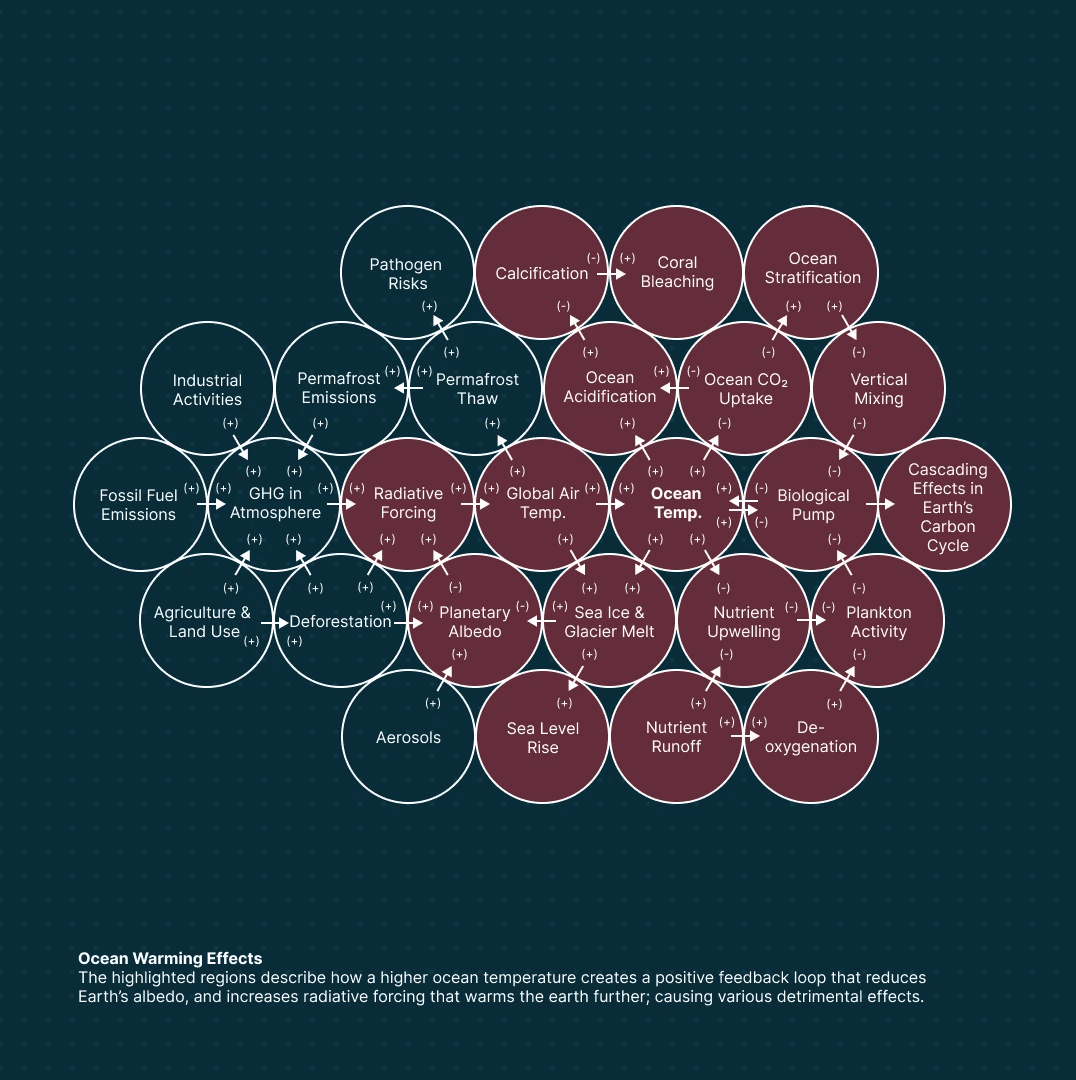
Ocean warming is primarily caused by human activities that increase greenhouse gases in the atmosphere. When we burn fossil fuels like coal, oil, and gas for energy and transportation, and clear land and forests for animal agriculture and urban development it releases carbon dioxide, methane and other greenhouse gases that trap heat, creating an energy imbalance that warms the planet.
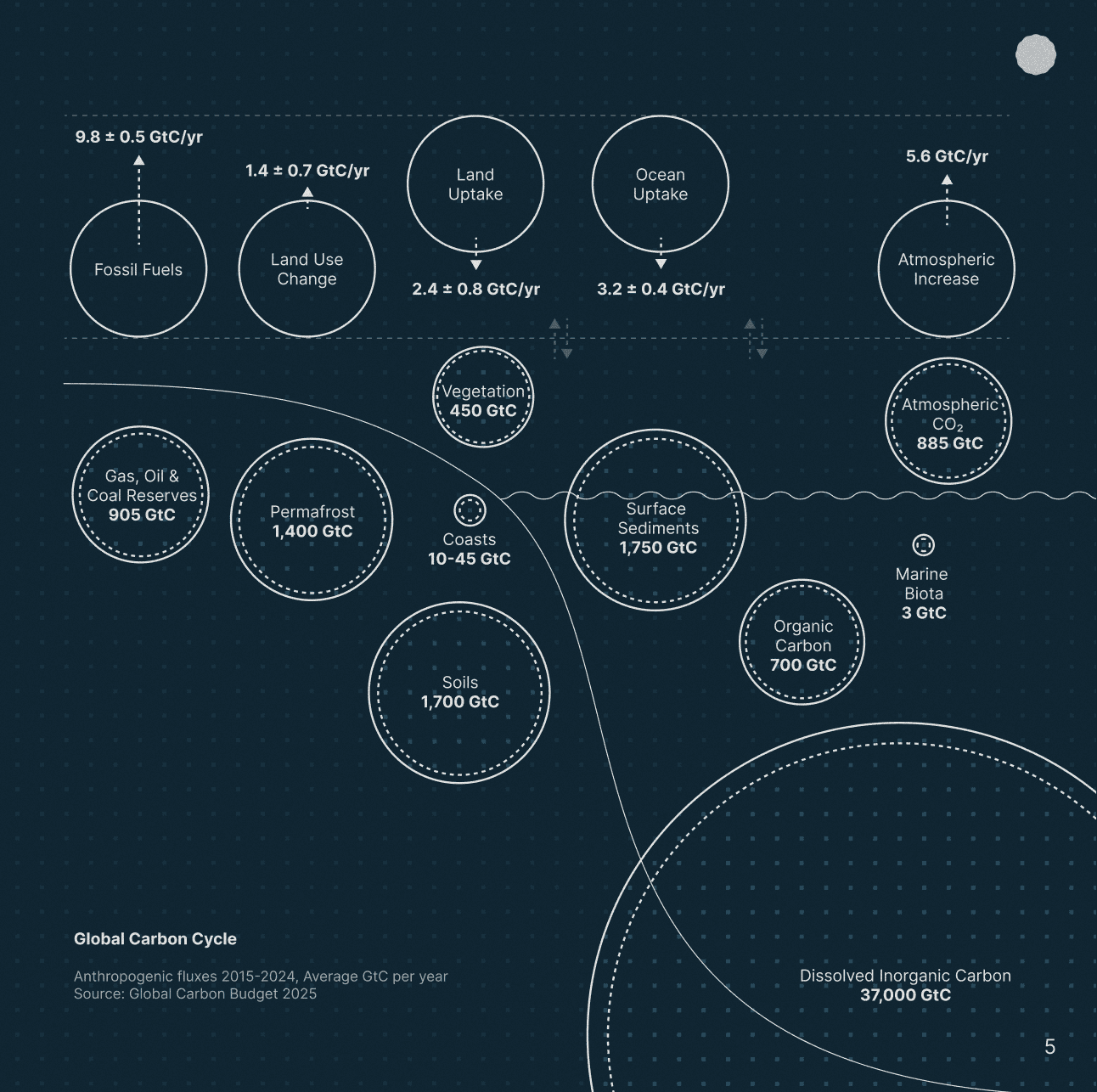
Despite progress in clean energy; growth in natural gas and oil use drives global fossil emissions up. The concentration of CO₂ in the atmosphere reached 427.49 PPM in 2025, 5.63 PPM above 2023, and 52% above pre-industrial levels.
The ocean has slowed the pace of atmospheric warming by absorbing enormous quantities of heat and carbon. The ocean sink (the net uptake of CO₂ by the ocean), has been 29 % of the total emissions in the past decade. According to the Global Carbon Budget, the ocean sink has been stagnant since 2016, largely in response to climate variability. It was 3.2 ± 0.4 GtC/yr during the decade 2015–2024 and it is being negatively affected by altered oceanic circulation, heatwaves, and surface warming which decreases CO₂ solubility.
Human Activities Are The Primary Driver
Ocean warming begins with emissions on land and at sea. It is the downstream consequence of greenhouse gas emissions across the global economy.
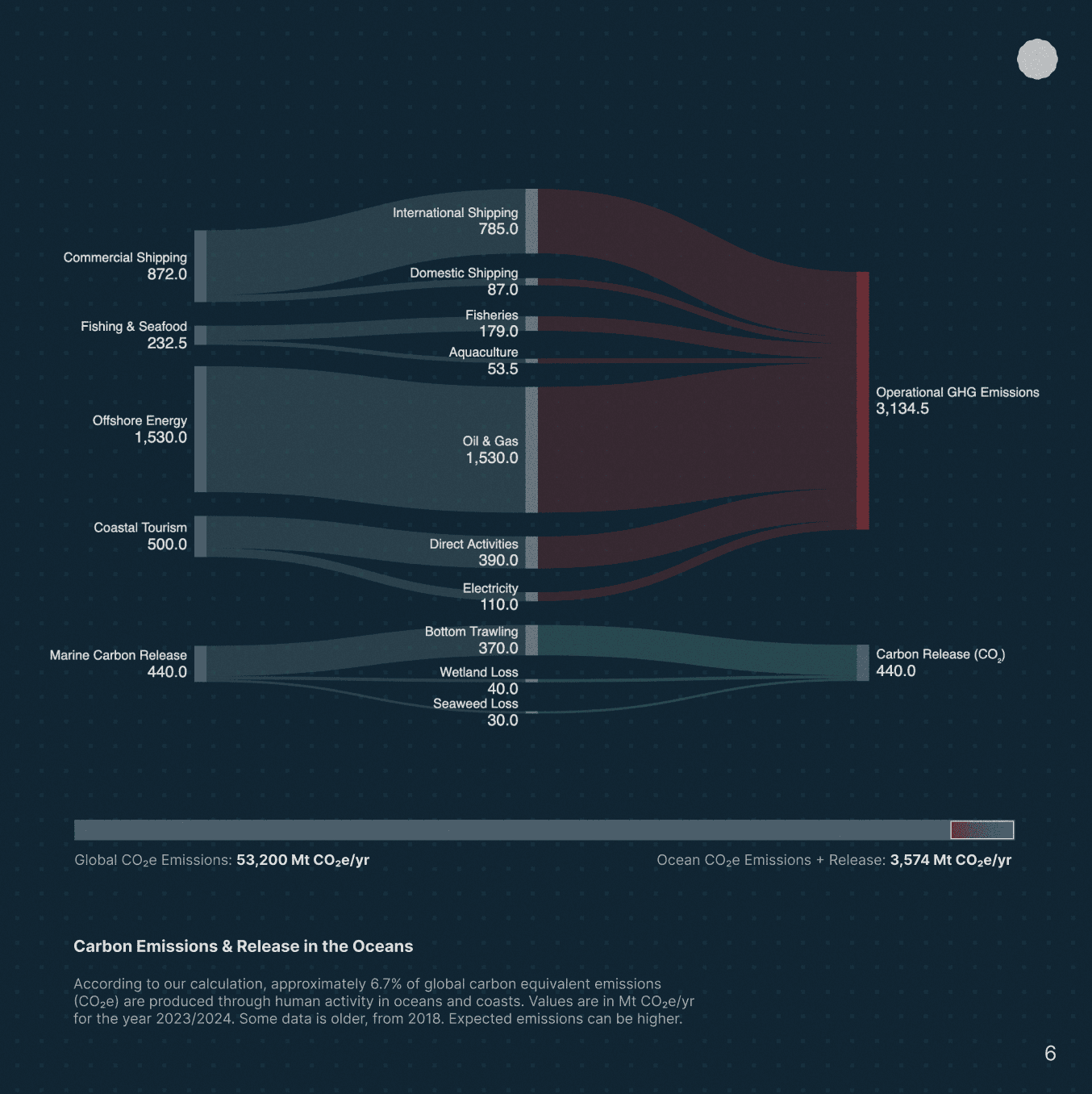
While the shipping industry accounts for 3% of global GHG emissions, there are several sectors that operate in the oceans which add up to 7% of global GHG emissions. This primarily includes trade, fishing, offshore oil and gas, and coastal tourism. Apart from these, marine carbon release from bottom trawling has been shown to be another major source of carbon release from ocean floor sediments.
The Sankey diagram shows the flows of carbon equivalent emissions (based on GWP), and this focuses on activities that occur in the oceans.
Offshore oil and gas emissions are estimated to be 30% of global oil and gas operational emissions. This includes scope 1 and scope 2 in production, but not usage on land.
Scope 3 emissions of coastal tourism are not included to reduce upstream complexity. It only includes direct activities and energy used for electricity.
Effects on Ocean and Human Well-Being
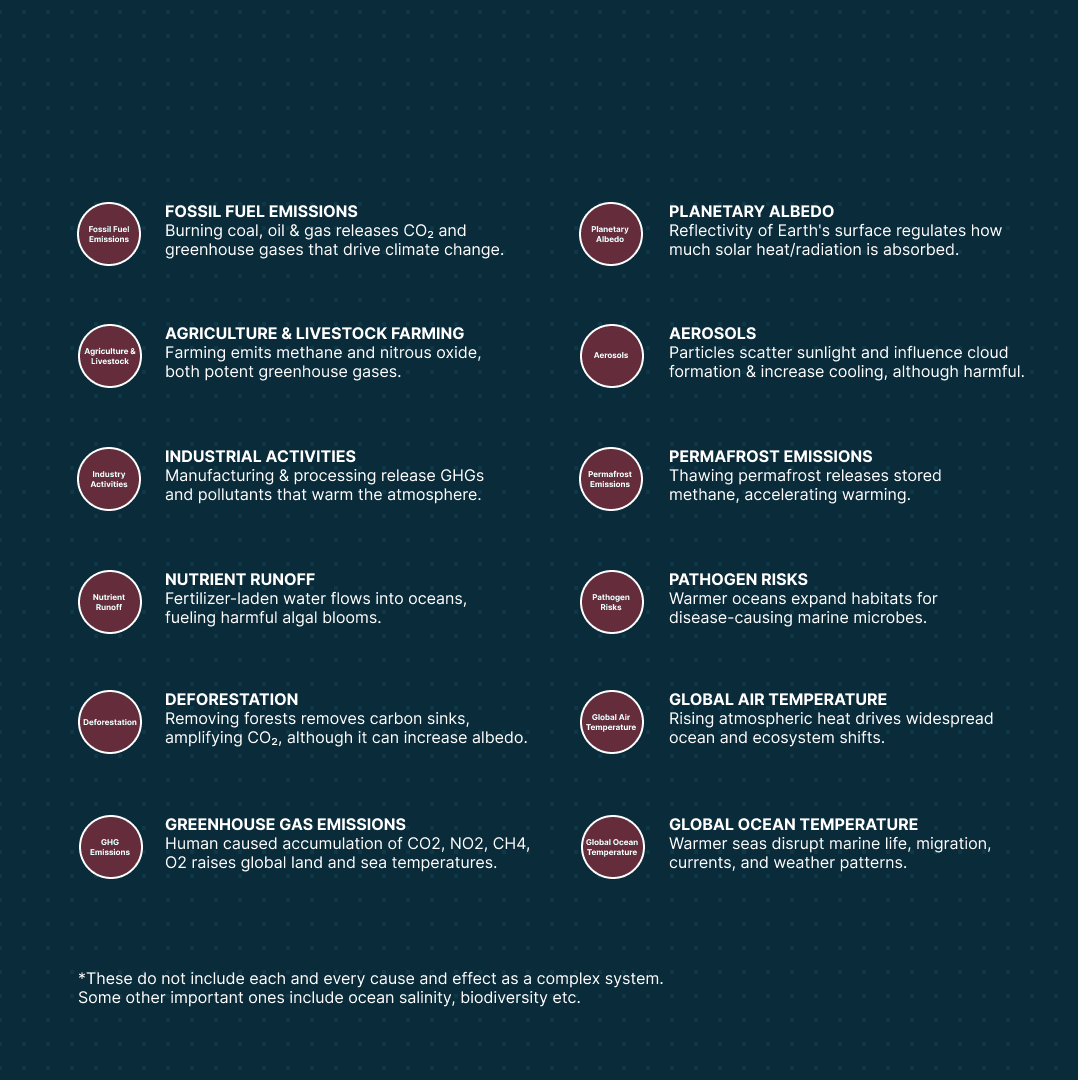
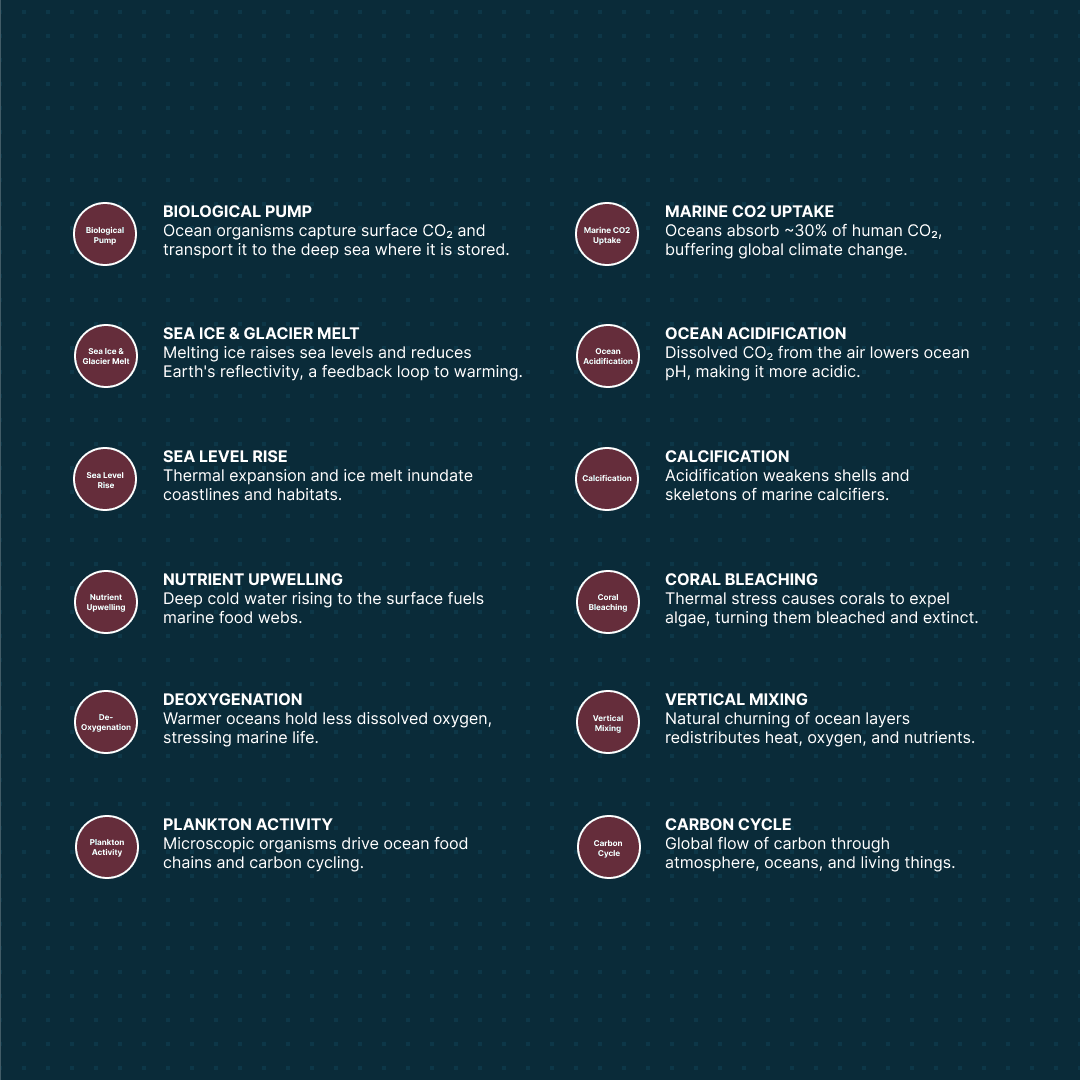
Altogether, poor ocean health disrupts ecosystems, harms the biosphere, and impacts human communities that depend on the ocean for food and livelihoods. It is important to realise that impacts are not distributed equally. The people who are most dependent on marine ecosystems, the millions of people who live near coasts, and those with the fewest resources to adapt often face the greatest risks. The effects of warming oceans on humans are serious and wide-reaching.
Food Insecurity: Warmer waters → Migrating fisheries and changing aquaculture → reduced access to nutritious seafood.
Extreme Events: Warmer oceans → more intense precipitation and tropical cyclones / coastal hazards → mortality and displacement.
Disease Exposure: Warmer waters → expanded range for some pathogens and vectors → exposure to certain diseases.
Mental and Social Health: Loss of livelihoods, displacement and ecosystem degradation → stress, anxiety, loss of community.
Impact Solutions
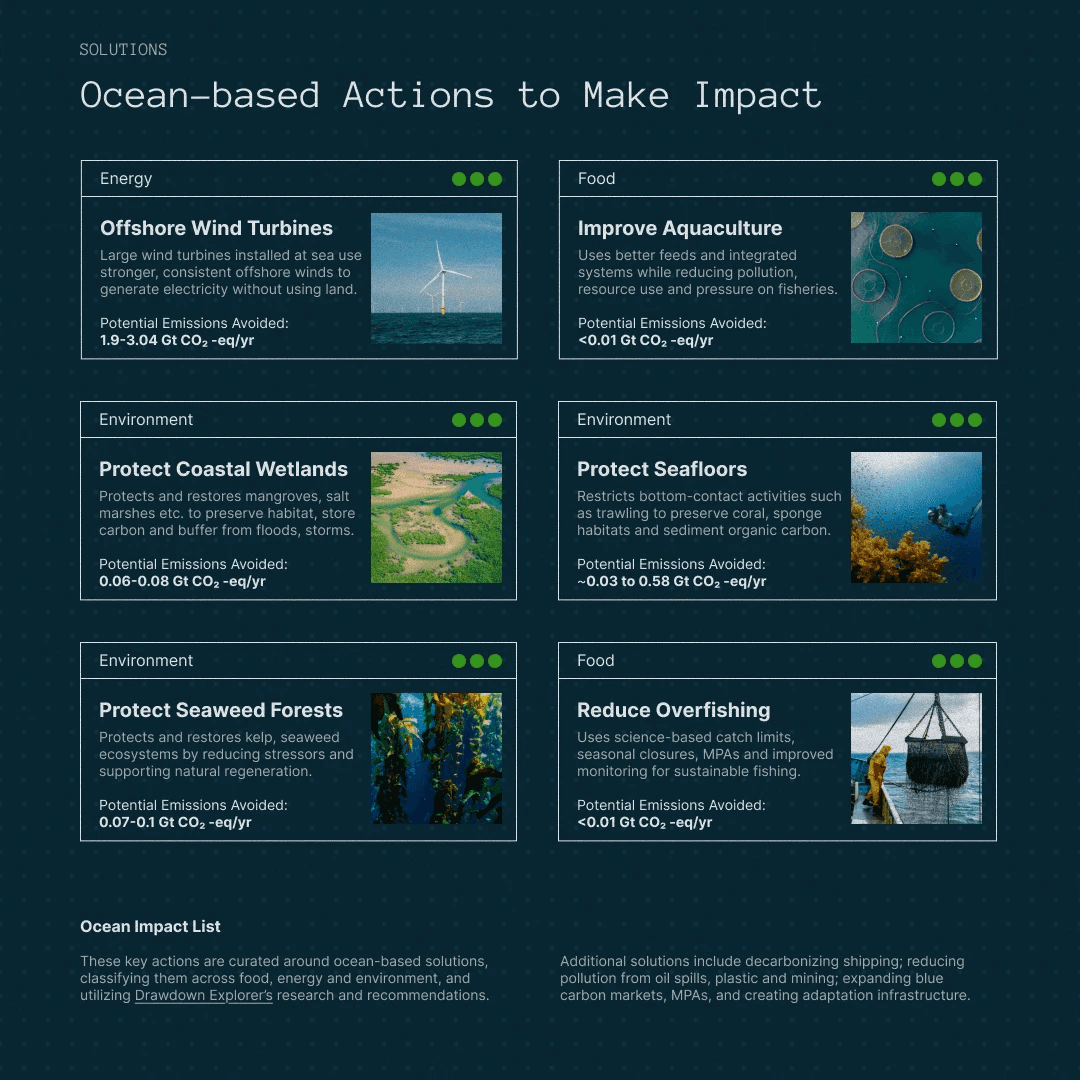
Climate change threatens human futures through rising sea levels, stronger storms, and the shifting migration of fish due to warming oceans. By implementing proactive measures, we can protect coastal communities, conserve marine biodiversity, and unlock sustainable economic growth within the blue economy.
Mitigation
Mitigation is ultimately about reducing the pressure placed on the ocean by addressing climate change at its source. It asks: how do we stop greenhouse gas emissions to reduce warming? It requires moving from a system that continually adds carbon and heat to the climate system toward one that operates within ecological limits. The challenge is therefore not simply to reduce emissions, but to change the underlying systems and incentives that produce them.Adaptation
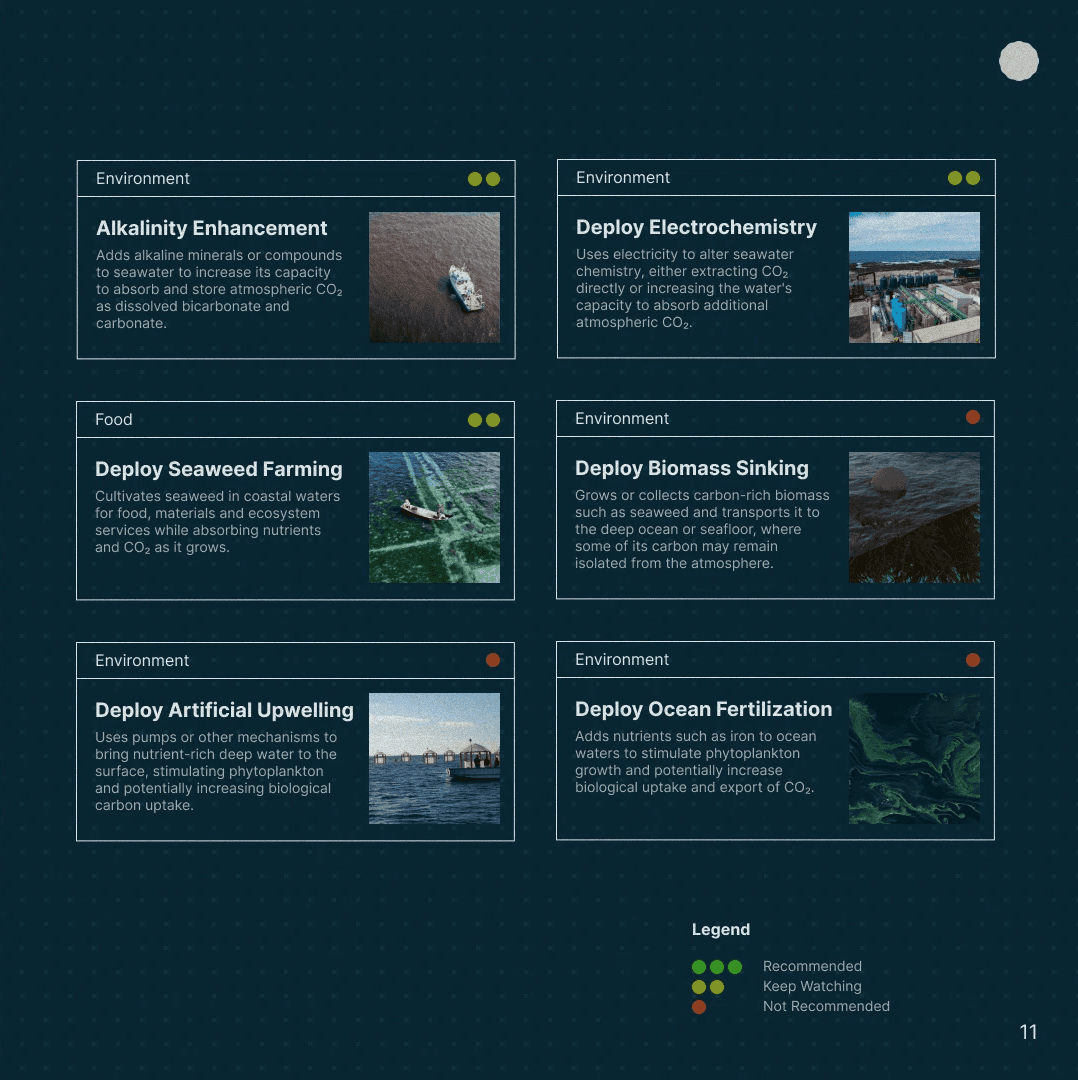
Adaptation and restoration address a different question: how do we live with a changing ecology while maintaining its capacity to support life? Adaptation reduces vulnerability as conditions change, while restoration strengthens the ecosystems that absorb environmental stress and provide essential functions. Together, they move beyond trying to preserve the ocean in its current state toward building resilience; allowing both marine ecosystems and the communities that depend on them to continue functioning under new conditions.
Final Thoughts
The ocean has always been a place of reckoning. It is where the atmosphere and geosphere meet the hydrosphere, where currents are set in motion, where the biosphere still thrives, and where the impacts of change play out across massive scales. To study oceanographic systems is to sit with that enormity.
As ocean temperatures broke record after record through 2023, 2024 and 2025, and with the El Nino we face in 2026, it is clear that the conversation around ocean health needs a different kind of framing, moving beyond dystopia and into the territory of hopeful planetary thinking. What are the systems at work? What are the feedback loops already in motion? How are they affecting planetary ecosystems? And crucially, what decisions still matter?
Ocean Futures: Part I, and now Ocean Futures: Part II are an attempt to hold that complexity without flattening it. These independent reports draw on climate science, systems thinking, and futures design to map the forces shaping our seas; with ocean health as the central thread. Warming does not happen in isolation. It pulls on everything: the carbon cycle, marine biodiversity, coastal communities, global food systems, geopolitical stability. This work traces those connections as honestly as possible.
This is created for people who want to think deeper about what is happening to the ocean, what has already changed, and what remains possible. The future of the ocean is not yet set. The range of outcomes between the best and worst scenarios is stark, and much of what sits within that range depends on choices being made today. This resource aims to be a useful tool for those making them.
The 2026 report will be launched soon. Stay tuned.